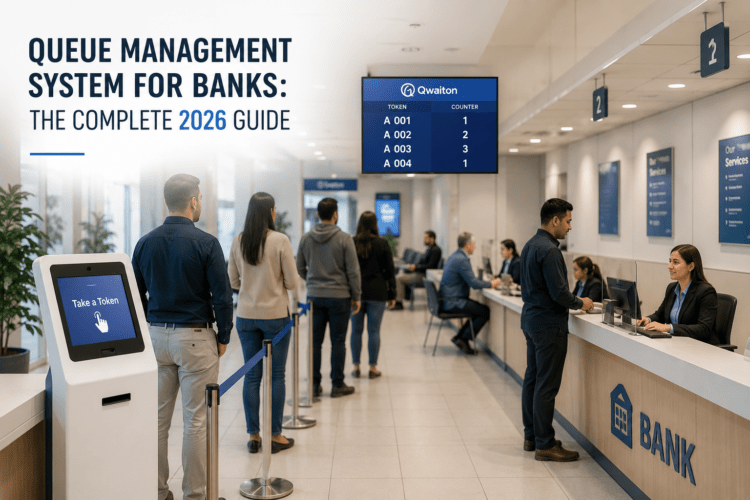


In the year 2025, enterprises will be under so much pressure as never before to be seamless, efficient, and customer-centric. The customers expect much more from services of waiting in lines and manual queue management. This is where a Queue Management System (QMS) is not just relevant but a necessity. Designed to assist automated service delivery, reduced customer waiting time, and motivating staff, queue management systems are today an essential dimension of modern business practice.
No matter what area you work in-whether healthcare, banking, retail, government, or hospitality-investing in high-tech queue management system software is one of the best strategic moves into future-proofing one’s service infrastructure. Here are a few reasons why implementing a cloud-based queue management system should be at the top of the list in your 2025 plan.
1. Improved Customer Experience
The satisfaction of a customer is linked to how he experiences the service when rendering it. Everyone hates it when he or she has to wait long lines and feels neglected. A Queue Management System allows smooth customer flow, shortening the perceived waiting time and making sure that courteous visitors are kept well informed on the status of their queue. From digital ticketing to real-time wait updates and SMS notifications, modern systems offer a frictionless experience that boosts satisfaction and retention.
2. Operational Efficiency Streamlined
Most of such manual queue systems entail a disorganized service process with staff burnout and inconsistent performance. Queue Management System Software automates the queuing process and uses intelligent routing to direct customers to appropriate service desk / department. It promotes equity and logical flow in an operation and lets managers allocate resources where they find it necessary. This reduces waiting idle time, creates a balanced workload, and makes smoother transitions between tasks leading to an efficient and productive team.
3. Real-Time Data and Analytics
It is not an option anymore for making decisions based on data by 2025. A queuing system fully exposes detailed analytics for average waiting times, peak hours, service time, and staffing metrics on performance. All these things do permit businesses to recognize bottlenecks in demand, forecast demand patterns, and perfect the operations based on it to the level of visibility they need to improve the quality of service proactively in increasing customers’ retention.
4. Contactless and Safe Service Environment
The lessons learnt during the pandemic years still influence customers’ behavior. Even in 2025, many will seek to minimize physical contact while accessing services. Cloud based queue management systems allow for online bookings, contactless check-ins via apps, and QR codes. The result is not merely a safe environment; it also serves the purpose of attracting a tech-savvy clientele that treasures convenience and autonomy in their customer journey.

5. Scalability Across Locations
Businesses with multiple branches or service points need centralized controls for their operations. Traditional queueing solutions generally lack an option for scaling, whereas cloud-based queue management systems operate on a highly scalable paradigm. The centralized dashboards and the cloud connectivity allow administrators to monitor queuing performance in real-time across all locations. This uniform method guarantees consistent service delivery and would make any further scaling an easy task.
6. Shooting Staff Productivity along with their Morale
With Queue management systems that eliminate pitfalls in waiting in line, Frontline employees worry less about waiting in line. For instance, with the queue distribution and service assignment made automatic, the employee has become free from the chaotic disturbances of administrative tasks in order to give attention to quality service rather than focusing on those subjected. The results are high job satisfaction and low turnover. Likewise, with a queue management system software, performance monitoring tools are available that can be used for more focused training and incentive programs according to actual data from services.
7. Integration with Wider Digital Ecosystems
In the years of 2025, digital transformation will be the standard, not a trend. With the modern queuing management system, it can smoothly integrate with other third-party applications such as Customer Relationship Management or CRM software, appointment booking tools, Point of Service or POS systems, and feedback collection modules. One can create a flow of all these together to automate business processes and yet still maintain a 360-degree view of the customer journey-integration. For example, the service provider sends them a reminder, schedules the timing, and collects post-service feedback, all in one interface. QMS is where information for all of these processes lives.
8. Cost and ROI-Efficient
People complain that queue management systems are expensive, but in reality, they provide excellent return on investment. Reducing customer drop-offs, improving staff performance, and boosting satisfaction all translate into increased revenue and customer loyalty. Especially with cloud based queue management systems, businesses save on infrastructure, maintenance, and IT staff—making them a budget-friendly choice for both large enterprises and small businesses.
9. Regulation Compliance and Audit Trails
Regulatory compliance, in industries such as healthcare and banking, is one of the most significant barriers faced. Queue management systems literally record interaction entries, keep timestamped entries, and create service logs, then building an elaborate audit trail for compliance purposes. This kind of audit is very useful in referrers or any industry with harsh guidelines, particularly regarding concern and peace of mind granting legal defense.
Conclusion
Today, having a robust Queue Management System to manage customers is no longer an option: it’s a necessity. Any and every business with the plan for 2025 must look beyond what is efficient and intelligent to discover workable solutions that are scalable and secure. The areas to benefit from improved operations, greater customer satisfaction, or access to a cloud based queue management system feature in most cases seem clear and well understood. Investing in the right queue management system software can guarantee trust, better service delivery, and competitiveness even in a digital and ever-demanding world.