

In today’s high-speed world of healthcare, the patient experience starts a long time before they are ever in the doctor’s office. It begins the moment they walk in the door and are greeted by the wait to check in and be seen. For most healthcare centers, that first step can be a source of significant stress and inefficiency. Long waiting times, crowded waiting rooms, and disorienting patient flows are typical issues that may result in frustration, missed appointments, and a poor perception of care quality.
Effective queue management is no longer a nice-to-have, but rather an essential aspect of healthcare operations today. By simplifying the patient experience, from arrival to discharge, healthcare professionals can not only make their operations more efficient, but also greatly enhance patient satisfaction and quality of life. The following article will discuss the major challenges in healthcare queue management and how a careful, tech-based solution can overcome them.
The Challenges of Traditional Patient Queues
Healthcare environments are by their nature complicated. They deal with a great range of patient cases, from regular check-ups to critical emergencies. Complexity exists in the fact that managing patient flow becomes challenging. Some of the most typical issues are as follows:
1. Erratic Patient Arrivals: Unlike any other company, a medical facility cannot always anticipate when a patient will show up. Walk-ins, emergencies, and tardy patients can all interfere with a well-planned schedule, causing bottlenecks and long wait times.
2. Overcrowded and Uninviting Waiting Rooms: Waiting rooms are the kind of spaces that bring with them a lot of anxiety for patients. An overcrowded area increases the likelihood of infection transfer, compromises privacy, and is an unrelaxed environment. The discomfort of waiting in an overcrowded space for an indefinite period of time can amount to a negative patient experience.
3. Ineffective Staff Deployment: Staff tend to spend precious time on clerical functions such as routing patients, responding to repetitive inquiries regarding wait times, and handling paper-based check-in procedures. This diverts them from more important responsibilities, including patient care. During a sudden influx of patients, staff can become bogged down quickly, resulting in mistakes and delays.
4. Patient Privacy Issue: Conventional queuing systems, which may employ a public number or a public announcement, may infringe patient privacy. Revealing a patient’s name or visit reason in a public area is a major confidentiality breach and makes the patients feel vulnerable.
5. Inability to Track and Analyze Patient Flow: Without a digital system, it is nearly impossible to gather accurate data on patient wait times, service times, and overall flow. This lack of information makes it difficult for administrators to identify bottlenecks, optimize processes, and make data-driven decisions to improve operations.
How Modern Queue Management Transforms Healthcare
A contemporary, technology-based solution to managing queues presents an effective solution to these issues. By making intelligent use of technology and substituting smart applications for outdated procedures, health centers can design a more streamlined, productive, and patient-centered environment.
1. Simplified Patient Check-In and Triage
The patient journey begins at the point of check-in. Through a digital queue management system, patients can check in upon arrival through a kiosk, mobile device, or a tablet belonging to a staff member. The system can subsequently automatically put them into the appropriate queue according to their appointment type or purpose of visit. For example, a patient for a lab test may be sent to a different queue than one who is visiting a specialist. This process assists in segmenting patient flow and avoids long, generic queues. The system can also be configured to collect pre-arrival data, like insurance information or patient forms, to further accelerate the process.
2. Virtual Queuing and Remote Waiting
Perhaps one of the most revolutionary functions is the capability to allow for a virtual waiting room. A cloud based queue management system enables patients to check in at home or in their vehicle. They can then be given instant alerts on their wait time and where they stand in the queue through SMS or a mobile app. This enables patients to wait more comfortably and privately, avoiding the discomfort and anxiety of an overcrowded waiting room. This also decreases the physical clutter within the building, which is particularly important for infection control.
**3. Better Communication and Transparency
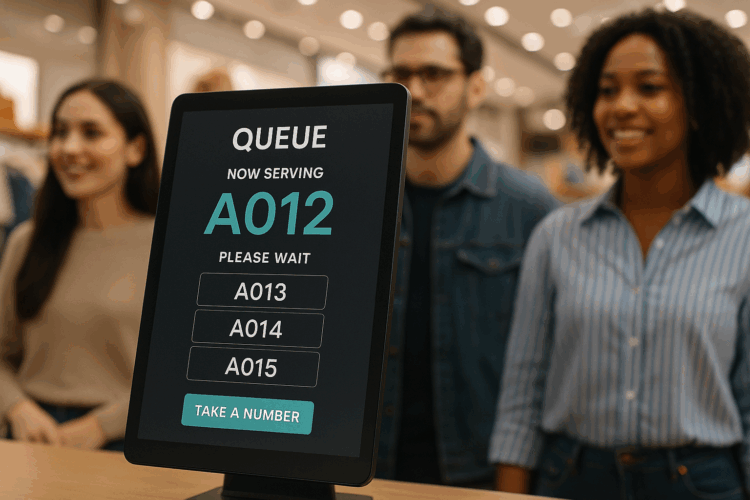
When patients are notified, their stress is minimized. A contemporary queue system employs electronic screens to provide real-time queue status, displaying which number is in service and the approximate wait time. This openness provides patients with a sense of agency and minimizes the sense of limbo. Outside the waiting area, the system may alert personnel when a patient is ready to be examined, providing an efficient handoff.
4. Optimized Staff and Resource Management
Digital queueing releases staff to work on caring for patients. The system controls the flow automatically, notifying the next available care giver. The system also gives administrators a real-time dashboard of patient flow so that they can see how long the longest queues are and redistribute staff accordingly. This results in better use of resources and lower staff burnout. Analytics data from the system assists with long-term planning, determining peak times and assisting in developing more efficient staffing schedules.
5. Data-Driven Improvements
A cloud based queue management system delivers a vast amount of data that can be leveraged to improve continuously. By monitoring metrics like average wait time, service time per provider, and patient no-show percentages, administrators can develop an intimate understanding of their operations. This information can be utilized to pinpoint bottlenecks, provide focused staff training, and optimize patient flow processes. Gradually, these can result in dramatic wait-time reductions and a substantial boost in patient satisfaction scores.
6. Seamless Integration for a Unified Patient Experience
To be most effective, a queue management system cannot be in a bubble. It must integrate with existing healthcare information systems (HIS) and electronic health records (EHR). An integrated cloud based queue management system can fetch the patient information automatically when the patient checks in and update their status in real-time, generating a single, coherent record of the patient’s experience. It eliminates manual data entry, reduces errors, and ensures that all patient data are accurate and secure.
A Real-Life Solution: The Qwaiton Advantage
In the healthcare environment, where time is of the essence, a trustworthy and patient-focused solution is something that cannot be compromised on. Our cloud based queue system has been created to meet the specific demands of healthcare settings. With virtual queuing, real-time insights, and integration ease, Qwaiton assists healthcare organizations of any size to build a more effective and empathetic patient experience. From the time a patient makes an appointment to the last follow-up, our system helps guarantee a seamless, hassle-free experience, so staff can concentrate on what is most important: delivering top-notch care.
In conclusion, the healthcare industry is at a crossroads. The demand for efficient, high-quality care is higher than ever, and patient expectations are evolving. By embracing a modern approach to queue management, healthcare facilities can overcome long-standing operational challenges, improve patient and staff satisfaction, and ultimately, deliver better health outcomes. It’s an investment in a future where waiting is no longer a source of friction, but a seamless part of a superior patient journey.