

In retail’s competitive environment, the customer path is paramount. Consumers are short on time and high on expectation. As much attention might be given to store layout, visual merchandising, and product assortment, the retailer’s opportunity to deliver the ultimate shopping experience lies in the too-often-overlooked checkout and service queue, the final stage of the buying journey. A poorly controlled queue can be the greatest source of friction, turning an otherwise good shopping experience into one of frustration and generating cart abandonment and lost loyalty.
Efficient retail queue management is not simply about lining people up; it’s about converting the wait into a component of the shopping experience itself. Through the use of deliberate strategies and the advancement of technology, retailers are able to reduce perceived wait times as well as enhance customer flow, generate impulse buys, and cement long-term customer loyalty.
The Hidden Costs of Poor Queue Management in Retail
For retailers, the results of inefficient queues go far beyond mere customer inconvenience. They directly affect the bottom line:
- High Abandonment Rates: Research has shown that an overwhelming portion of customers leave their purchase upon encountering a queue that they view as too lengthy. This is tangible, measurable lost revenue.
- Bad brand perception: Checkout is the final memory a customer gets of your store. A hectic, disorganized waiting process can override all the good things that they have experienced during their shopping trip, resulting in negative reviews and avoiding return visits.
- Decreased Staff Productivity: When staff are occupied with handling confused queues, dealing with irate customers, and fixing queue problems by hand, they are diverted from high-value activities such as serving shoppers, processing transactions quickly, or stocking shelves.
- Lost Upselling Opportunities: An unruly checkout area is not the best place for encouraging impulse purchases since the customer’s sole concern is getting out of the line.
The key to solving these issues is breaking away from the conventional single-line setup and embracing a savvy, digital method of managing the flow of customers.
Strategies to Revolutionize Your Shopping Queue
The deployment of a top-class queue management system enables retailers to approach strategically the agony of waiting.
- Adopting the Virtual Queue for Liberty and Convenience
The biggest change in contemporary retail queuing is relocating the wait process from a line to a virtual line.
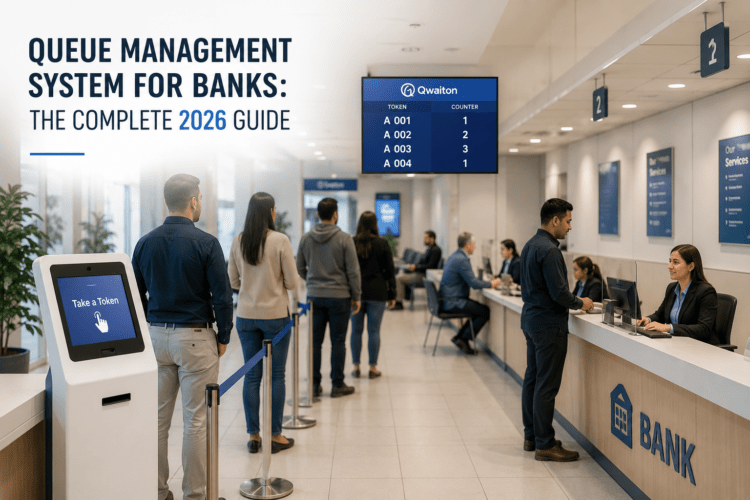
Free the Customer: A cloud based queue management system enables customers to check in at a kiosk, on their mobile app, or via a QR code in the store. They are given a virtual ticket and can browse on, get a coffee, or sit comfortably in a waiting area. This comes especially handy in stores where customers need expert service, e.g., a phone repair station or an exclusive personal shopping consultation.
Reduce Perceived Wait Time: While customers are being actively involved—navigating products or unwinding—their perception of wait time drops sharply. The virtual queue does away with the anxiety of queuing and always looking over their shoulders in anticipation of their turn. The system notifies them by SMS or mobile app alert when their service agent is available.
- Strategic Use of Queue Zone Merchandising
The waiting space, either physical or virtual, is high real estate for merchandising.
Seize Impulse Purchases: Rather than letting a serpentine line of consumers build up, use a bounded service space. Merchants should position high-margin, low-ticket impulse products at or close to the service counters. Without the frustration of waiting in line, buyers are more willing to seize these eleventh-hour buying opportunities.
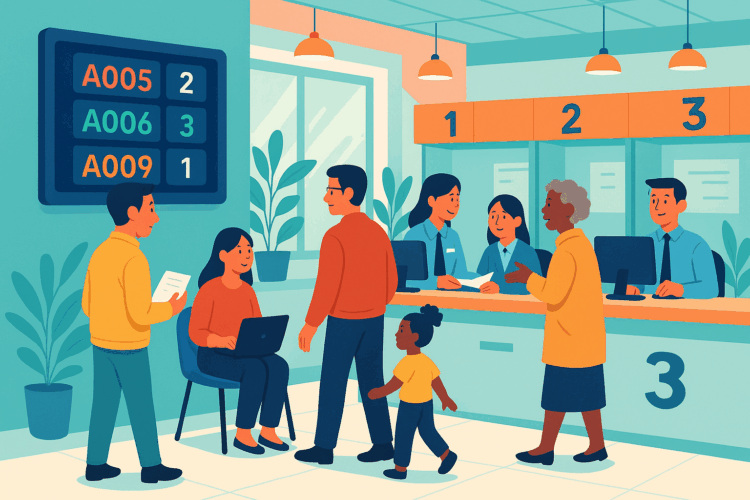
Digital Screen Advertising: For waiting customers who are queuing virtually, those waiting in the vicinity are focused on digital display screens which show their queue position. Screens are ideal for delivering targeted promotion, displaying new product offers, or promoting loyalty scheme rewards. A contemporary cloud hosted queue system is able to incorporate dynamic content with the queue position, making the most of the customer’s waiting time.
- Maximizing Staff Efficiency and Flow
One of the major roles of a queue management system is optimizing staff deployment to maximize productivity and speed.
Smart Routing: Not every customer need is the same. The system can be setup to query the customer for the reason they are visiting at check-in (e.g., return, pick-up, new purchase inquiry). The system then smartly routes them to the most suitable staff to process that request. This specialist-task matching minimizes transaction time, enhances first-contact resolution, and provides a more educated interaction.
Real-Time Workload Balancing: Managers get a real-time view of all open queues, agent availability, and service times. With this visibility, they can make data-driven decisions in real time—like opening an additional service counter, transferring staff from the floor to the service desk during surge hours, or calling an agent out for a brief break during downtime. This proactive management eliminates bottlenecks and provides the smoothest flow of customers possible.
- Developing a Personalized and Seamless Experience
Loyalty is founded on personalized, respectful treatment. A digital queue system gives the information required to make each encounter count.
Personalized Welcome: With the integration of the queue system with the retailer’s Customer Relationship Management (CRM) system, the service agent is able to automatically view a customer’s profile, buying history, and loyalty status as soon as their ticket is announced. This allows the agent to provide a welcome message based on the customer’s profile, greet them by name, and personalize their service recommendations.
Omnichannel Harmony: The new customer path crosses online and offline. A quality cloud based queue management solution facilitates this process smoothly. A customer who has made an “online click and collect” order can check in to pick up their order directly through the system, which notifies the inventory team and hands them off to an agent, so the product is ready when they get to the counter. This minimizes unnecessary steps and annoying wait times. Qwaiton excels at unifying physical and digital retail experience, with seamless transitions.
- Data Driven Continuous Improvement
The last, but most significant advantage, is the abundance of data that the queue system produces, which is priceless for strategic retail planning.
Actionable Insights: Cloud based queue management system captures every service interaction, and reports on such metrics as:
Average Wait Time (AWT): The length of time that customers are waiting.
Average Service Time (AST): The duration of particular transactions.
Walkaway Rate: Customers who leave the queue.
By breaking down this information by hour of the day, day of the week, and service type, retailers can identify their most critical hotspots. For instance, if returns are generating big wait times, the data indicates to assign a dedicated staff person or service desk for returns.
Optimized Store Layout and Scheduling: Retailers are able to optimize staff levels according to actual foot traffic using data insights, and they are able to strategically reconfigure the service area layout to better control flow. This enables management to eliminate guesswork and move towards knowledgeable, data-driven decision making that maximizes operational effectiveness and customer satisfaction.
Conclusion
In the retail setting, the queue is a key touchpoint—a last chance at closing a sale and affirming customer loyalty. By shifting away from antiquated, disorganized lines and to the intelligence of a new generation of queue management solution, retailers can redefine waiting as a time of friction rather than efficiency and possibility. An investment in a smart system is not only an operations upgrade; it’s an investment in a better customer experience, enhanced employee productivity, and the long-term success of the business.