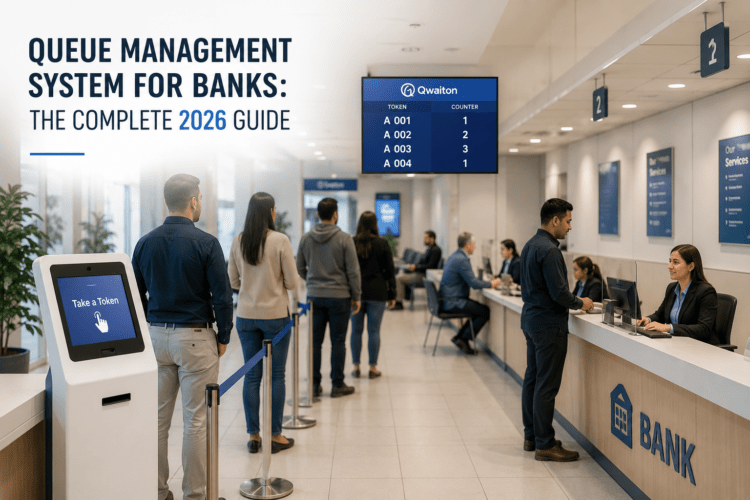


In every service environment, be it a busy retail bank, a government services office, or a health clinic, employee productivity is the driving force behind success. If employees are wasting time handling chaos, responding to redundant questions, or manually shepherding long lines, their useful skill is being squandered on administrative inefficiency. This not only creates frustration for the staff but also translates into slower service, increased wait times, and eventually reduced profitability.
The key is implementing an up-to-date queue management system. Such systems tend to be considered only a customer experience solution, but their effect on in-house operations—namely on staff productivity and workflow—is vast and revolutionary. By streamlining and automating the patient or customer process, these systems liberate workers to concentrate on their area of expertise: delivering high-level service and communicating with customers.
The Drain of Traditional Queue Management
Prior to discussing the advantages of computerized systems, we need to recognize the inefficiencies built into conventional, manual queuing systems:
- Continuous Interruption and Distraction: Service desk staff are continuously interrupted by customers requesting, “How much longer will the wait be?” or “Where do I go for this service?” These continuous interruptions disrupt concentration, cause mistakes, and considerably shrink the time for actual service provision.
- Inconsistent Workload Allocation: When there is no central system, one often finds one employee serving a huge queue while another has nothing to do or performing easy tasks. This inconsistency causes traffic jams, results in employee exhaustion, and provides a low average service time.
- Paperwork and Manual Activity Time: Conventional systems frequently entail employees issuing paper tickets manually, yelling out numbers, or escorting clients personally. These activities are redundant, non-value-added, and take up time that can be used to develop rapport or fill-out vital paperwork.
- Reactive Problem Solving: The employees are frequently left to handle impatient, irate customers who have waited too long with no updates. This deflected the employees’ attention away from service and towards solving problems, sapping energy and depressing the overall workplace culture.
Five Ways Queue Management Increases Staff Productivity
An advanced queue management system brings order, automation, and wisdom to the environment of service, radically transforming the manner in which employees function.
- Automation and Minimized Administrative Overhead
The main manner in which a digital queue system contributes to productivity is by automating the most time-consuming, non-value-added functions.
Automated Check-In and Routing: Customers may check in at a self-service kiosk, on their own device, or through a mobile app and will automatically choose the service. The cloud based queue management system will instantly position them in the appropriate virtual queue and route them to the proper service area. This saves employees time from having to manually give out tickets, tell them where to go, or keeping an entry log.
Eliminating Repetitive Queries: Because customers receive real-time updates and estimated wait times via digital signage or mobile notifications, they no longer need to constantly ask staff members about their wait status. This reduction in interruptions allows employees to maintain focus and work more efficiently. Staff can concentrate on providing thoughtful, high-quality service rather than being gatekeepers for information.
- Optimized Workflow and Workload Balancing
A central part of enhancing productivity lies in having the correct staff member view the right customer at the right moment. A queue management system is ideal for this by offering a single, fact-based view of the overall operation.
Intelligent Routing: The system can route customers based on the specific service they require, matching them with an agent who has the necessary specialization. This ensures that complex requests go to experienced staff, while simple transactions can be handled quickly by any available agent. This specialized workflow dramatically reduces service time and ensures first-contact resolution.
Real-Time Workload Visibility: Executives and employees get to see a real-time dashboard presenting all the queues, wait times, and workload of each service agent. If an agent’s queue starts piling up, the system automatically reassigns the next several customers to a less congested peer, avoiding bottlenecks before they arise. This feature guarantees a smooth process all day long.
Qwaiton enables your staff by converting disorganized lines into a prioritized, orderly flow of service, keeping no one overworked.
- Insights on Staff Performance Based on Data
You can’t improve what you can’t measure. A contemporary queue system offers robust analytics that enable managers to comprehend staff efficiency and detect training and optimization opportunities.
Rightful Performance Metrics: The system automatically monitors critical performance metrics for each worker, such as:
Average Service Time (AST): Time spent servicing a customer.
Average Wait Time (AWT): Time spent waiting by customers for that agent.
Throughput: Total number of customers serviced.
Managers can glean from this data high-performing employees to use as role models, and areas where others may need additional training or assistance. This takes performance measurement from qualitative observation to quantitative, actionable information.
Optimized Scheduling: With the integration of historical queue data, the manager can project peak times and customize staffing schedules to align with demand. This ability to predict enables the facility to be adequately staffed during heavy traffic and avoid overstaffing during off-peak periods, resulting in substantial cost savings in labor costs and a better-balanced schedule for employees.
- Reduced Workplace Stress and Better Morale
A well-structured workflow is directly equivalent to a more peaceful, enjoyable working experience, which is instrumental in long-term productivity and employee retention.
Less Conflict and Frustration: When customers have been told how long they will be waiting and are waiting in comfort (often in the virtual sense), they are much less likely to arrive at the service desk upset or frustrated. Employees can then interact with a patient, composed customer base, making their work more pleasant and less stressful. They can concentrate on delivering great service instead of dealing with impatience.
A Clear Sense of Purpose: By freeing workers from back-office chores, the queue system enables employees to concentrate on tailor-made service, developing relationships, and addressing complex issues. This change raises the value and significance of their work, resulting in higher job satisfaction and reduced turnover.
- The Flexibility of Cloud Based Queue Management
Selecting a cloud based queue management system offers logistical advantages that have the direct effect of boosting staff productivity by making it easy to manage and scale.
Easy, Remote Access: A cloud based queue system uses very little, if any, hardware on site. Employees and managers can access dashboards, change queue settings, and view reports from any approved device with internet connectivity. Easy access is priceless for businesses with multiple locations or managers who must monitor business operations remotely.
Hassle-Free Maintenance: Because the system is cloud hosted, everything from software updates to security patches and maintenance is taken care of automatically by the provider. This leaves your IT staff relieved of having to maintain and update in-house servers, freeing them up to work on the core organizational technology requirements. The uptime ensured by a solid cloud based queue solution means minimal system crashes and disruptions to the staff workflow.
Finally, the introduction of a modern queue management system is a strategic investment in your employees. It’s not about lining up people; it’s about creating an efficient, supportive, and data-driven work atmosphere. Through the automation of the mundane, workload balancing, and actionable performance analytics, a system like this empowers your employees to perform at their best, turning service delivery from a stress source into a productivity model and customer satisfaction.